Blog

Beyond data, integration, and agentic workflows — exploring the ideas shaping Organizational Cognition for Enterprise AI.

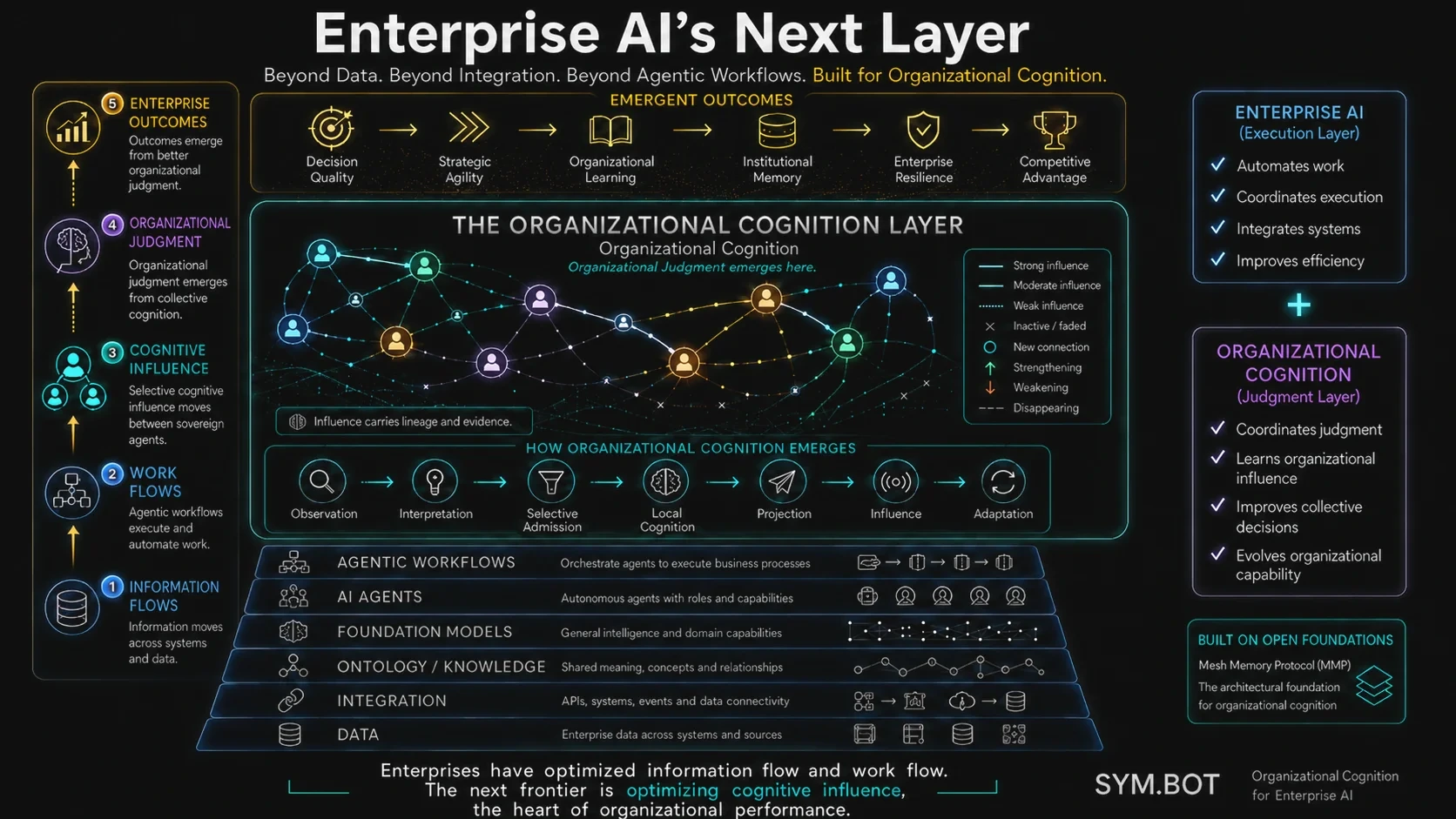
Figure 1. Organizational Cognition as the next enterprise architecture layer.

Enterprise AI's Next Layer

Beyond Data. Beyond Integration. Beyond Agentic Workflows. Built for Organizational Cognition. The foundational article for the category: enterprise AI has optimized information flow and is rapidly optimizing work flow — the next frontier is optimizing cognitive influence, allowing better organizational judgment to emerge.

Read the post →

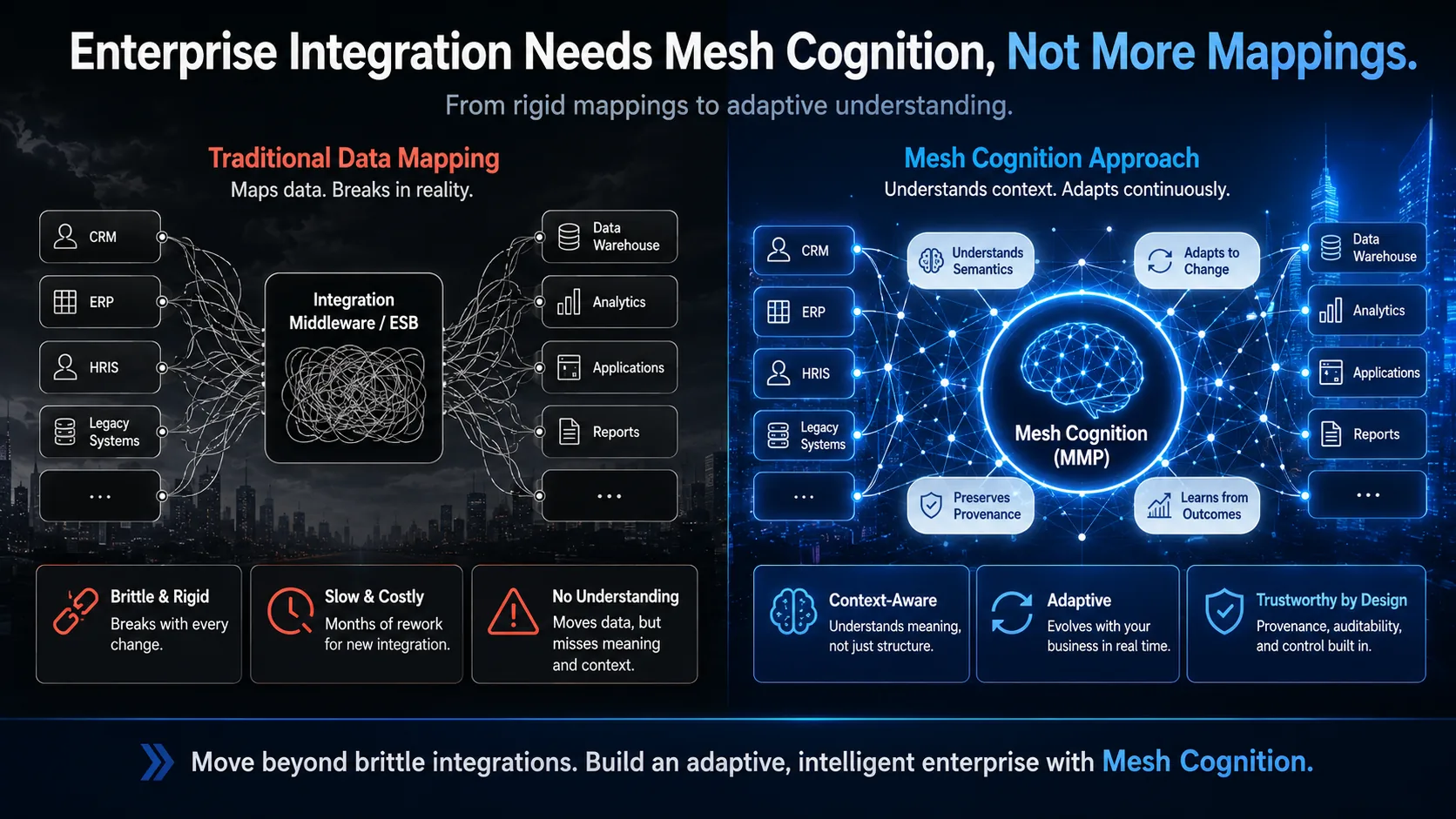
Enterprise integration needs mesh cognition, not more mappings — brittle traditional middleware/ESB integration that maps data and breaks in reality, versus a mesh-cognition (MMP) approach that understands semantics, adapts to change, preserves provenance and learns from outcomes

Enterprise Integration Is Structurally a Mesh-Cognition Problem

Integration programmes run for years and often never finish — and the reason was never one blocker to remove. Moving data between systems is engineering; making it mean the same thing on both sides is an ontology, held by the people who run each system. Reconciling their readings takes understanding, not a definition — cognition that only emerges when the source and target owners couple. Integration runs at every level at once, and no single seat sees all of it, so it can’t be authored centrally.

Read the post →

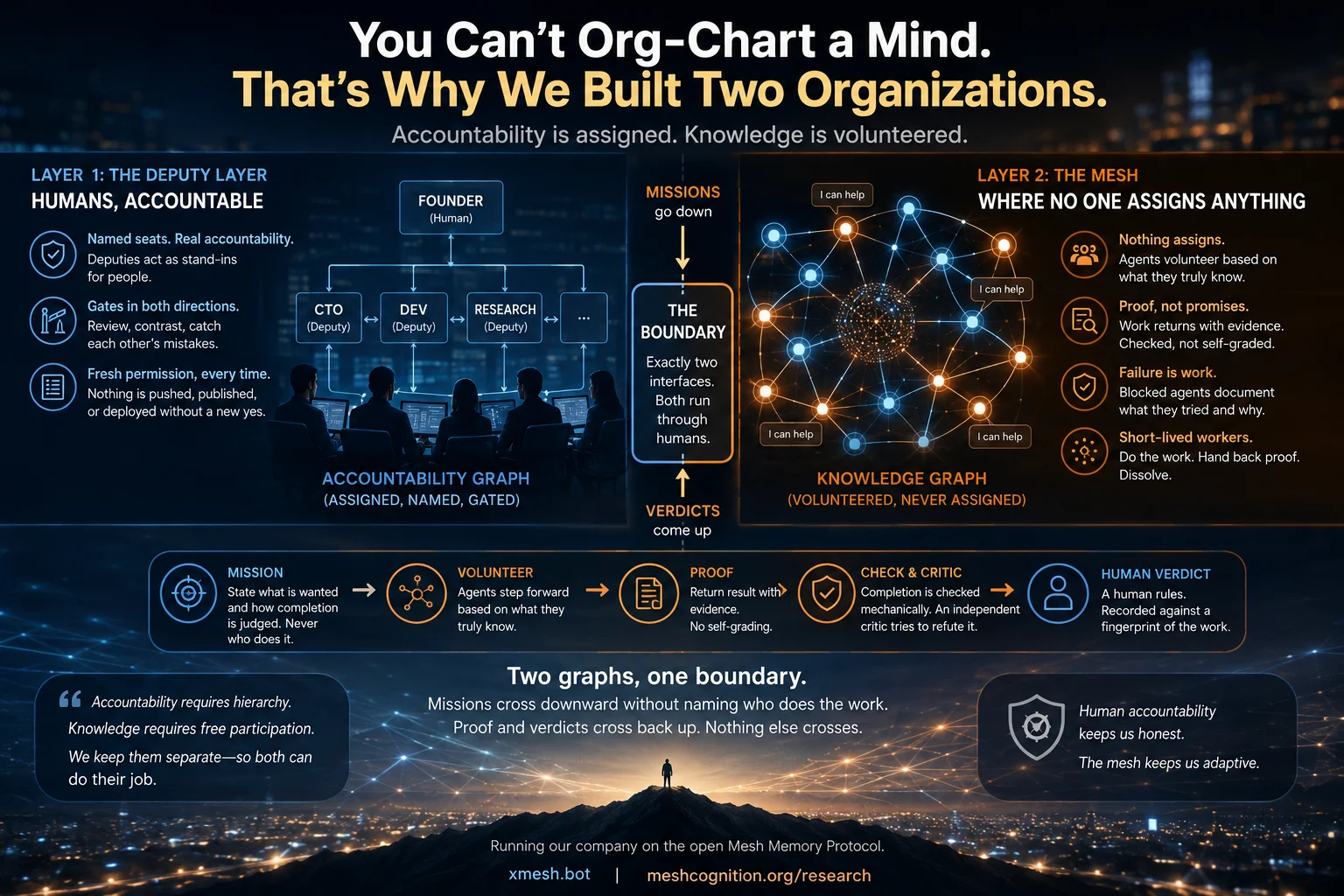
Two organizations side by side — a deputy layer that is the accountability graph, a mesh that is the knowledge graph, and the boundary between them where missions go down and verdicts come up

You Can't Org-Chart a Mind. That's Why We Built Two Organizations.

An org chart defines stakeholders — who has standing in a decision, who signs off, who carries the consequences. It was never drawn to say who knows anything. Stake has to be assigned; knowledge cannot be. So we run two layers with opposite rules, and the boundary between them is the design.

Read the post →

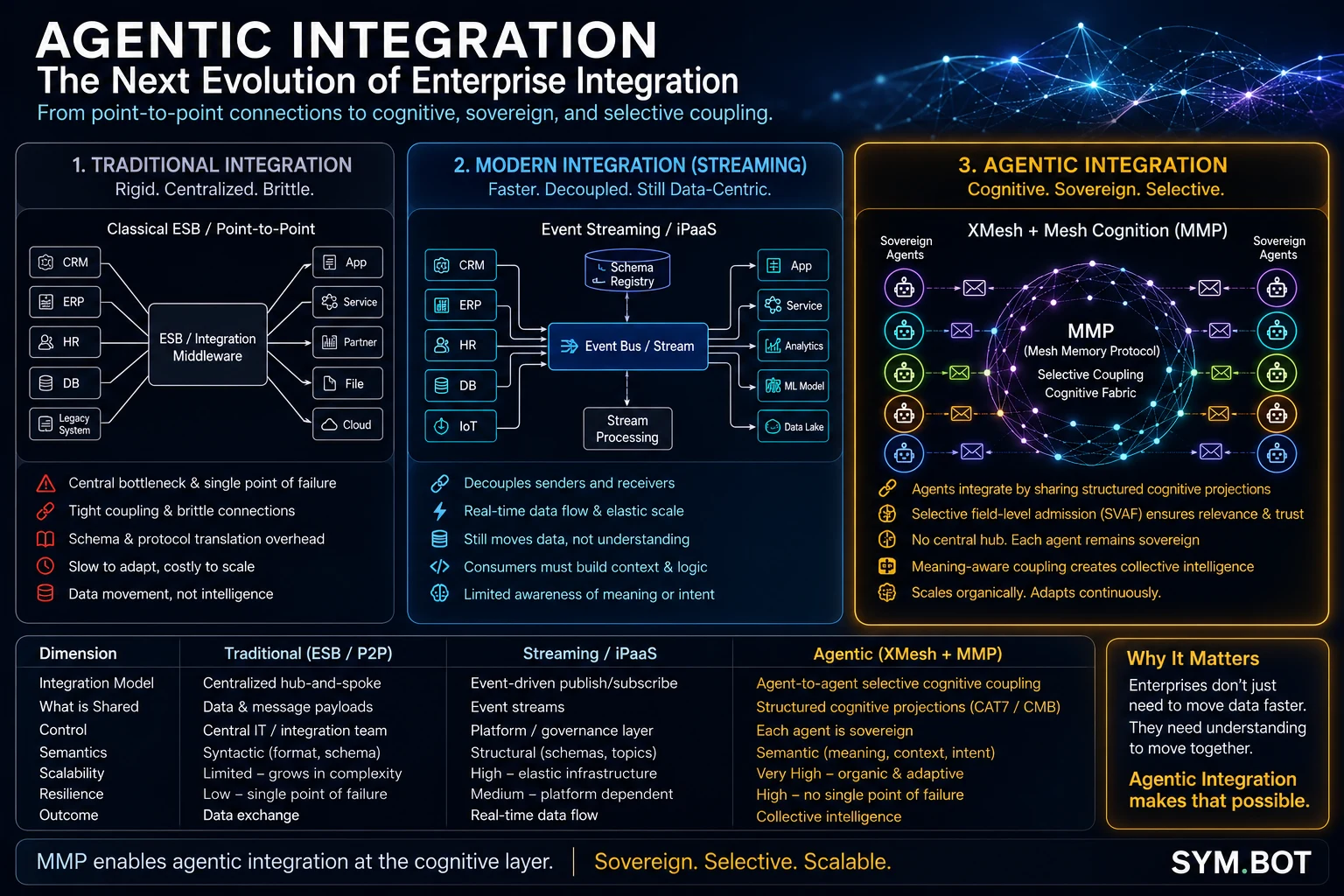
Three generations of enterprise integration — central ESB, event streaming bus, and agentic integration with no central hub

Agentic Integration Starts Where the Pipeline Breaks

Every integration project begins with a map of systems, and the map is always wrong because nobody can know what the work will need before the work runs. Start with one real task instead — and let the failures name the systems you actually need. Connectors become demand-driven.

Read the post →

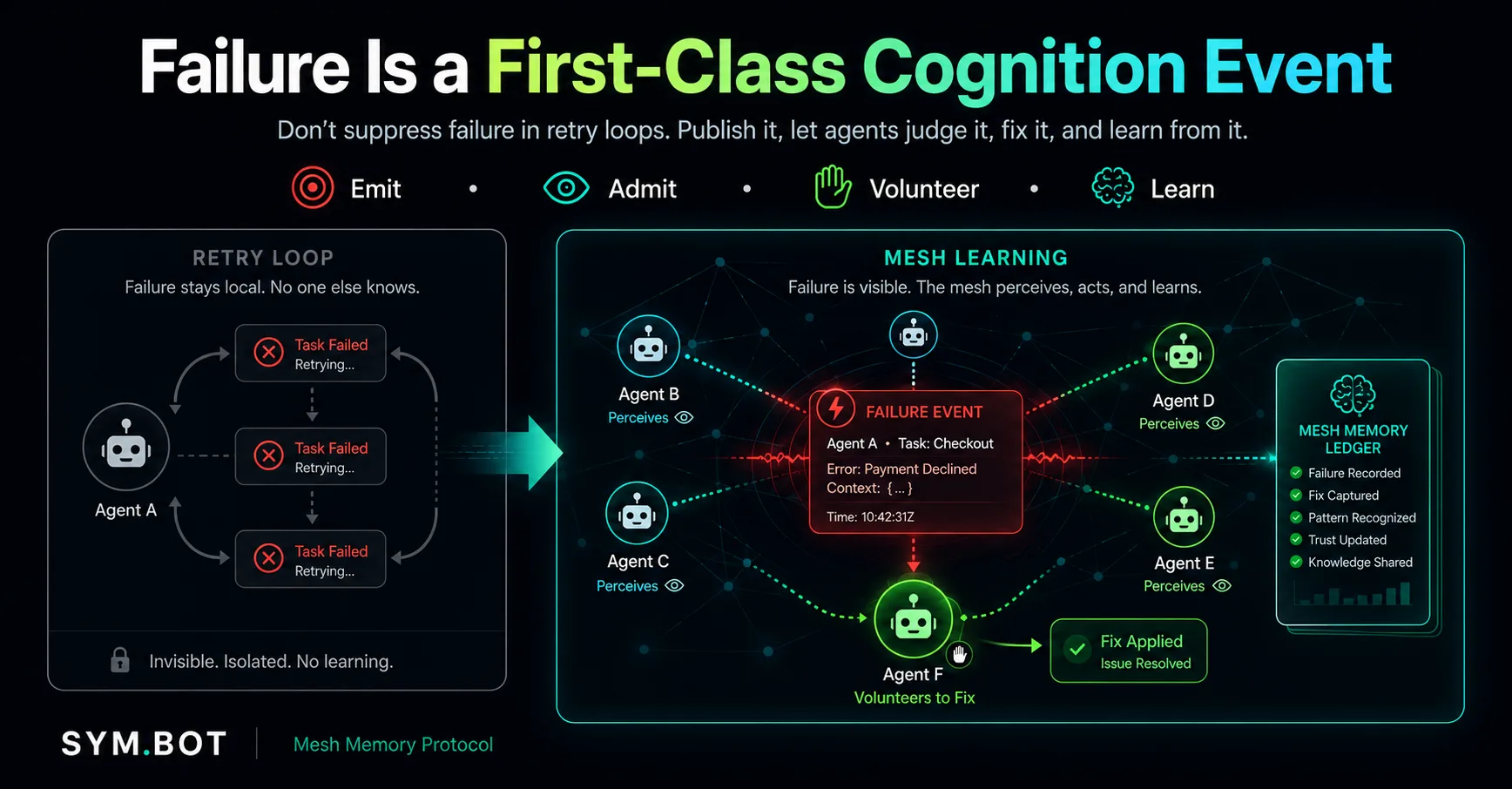
Retry loop versus mesh learning — Emit, Admit, Volunteer, Learn

Failure Is a First-Class Cognition Event

Every AI framework treats failure as an exception to suppress — retry, fallback, escalate. That throws away the most valuable signal a system of agents produces. What AI is going to do with failure instead: publish it, let the right agent volunteer, and let trust learn from who fixed what.

Read the post →

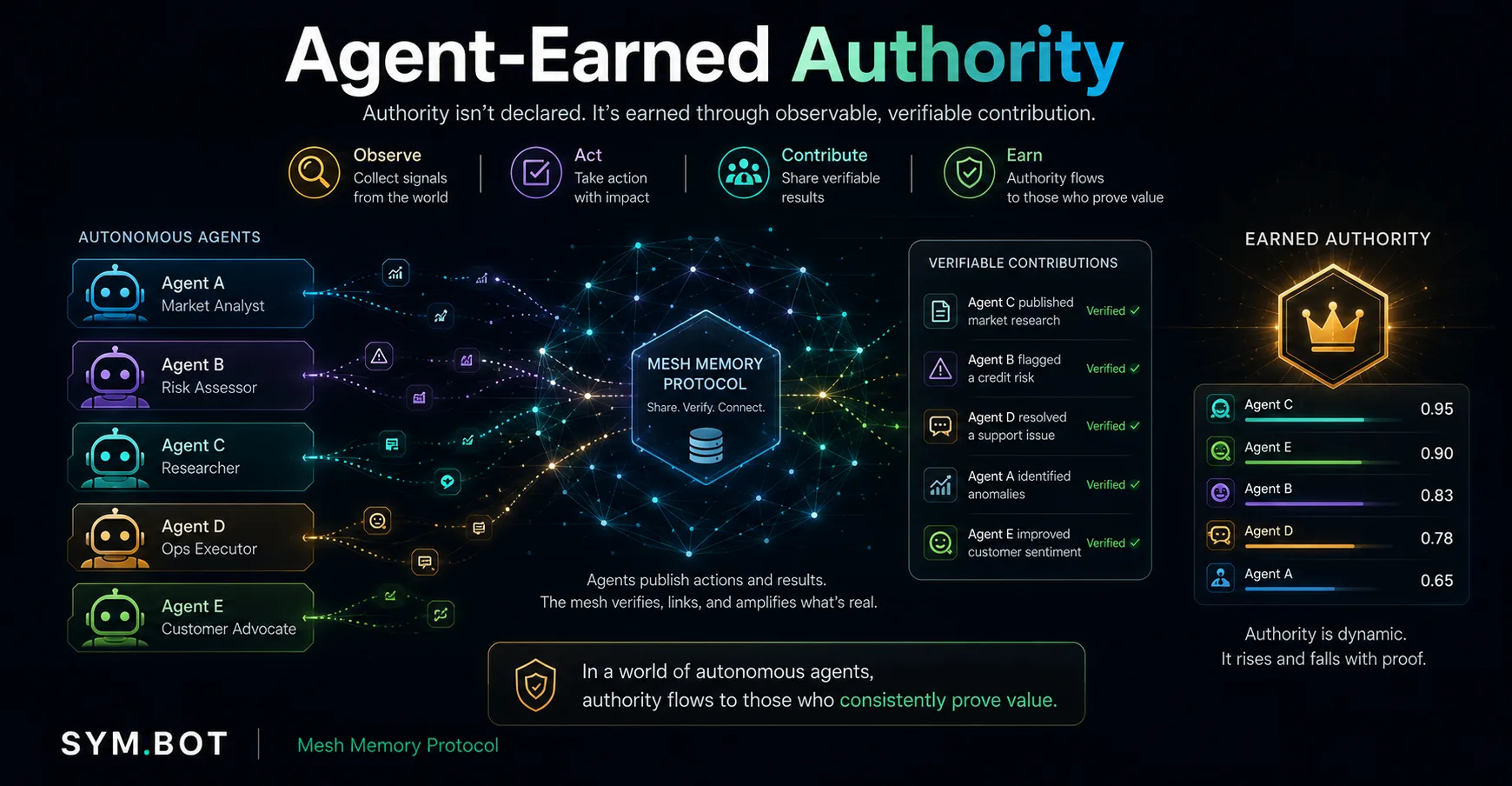
Agent-earned authority — Observe, Act, Contribute, Earn; authority rises and falls with proof

How My AI Agents Earn the Right to Make Decisions

Every multi-agent framework treats agents as equal peers. That breaks in production. Here's how identity-bound validation authority and earned role progression solve agent access control at the protocol layer.

Read the post →